Green Energy | 1. Hydroelectric energy, 2. solar energy, and 3. wind energy as Green Energy | Renewable Energies
Green Energy
The energy generated by processes that are environment-friendly is called green energy. It provides a sustainable alternative to traditional fossil fuels, reduces pollution from atmosphere, but provides long-term energy security.
The sources of energy such as water, wind, sunlight, and biofuel can be called green energy sources. This is because these sources of energy are renewable, inexhaustible, and non-polluting.
Using these sources for electricity generation does not lead to problems such as pollution, respiratory illnesses, radioactive wastes, shortages of fuel, etc.
Examples of green energy:
(a) Hydroelectric energy;
(b) Wind energy;
(c) Solar energy;
(d) Energy obtained from biofuels.
Is energy obtained from fossil fuels, not green energy?
Fossil fuels include coal, mineral oil, natural gas, etc., and all contain carbon. When these fossil fuels are burnt to obtain energy, harmful gases such as carbon dioxide, sulphur oxide, and nitrogen oxide are emitted. Upon incomplete combustion, carbon monoxide is emitted…
These pollutants cause. environmental problems like global warming, acid rain as well as respiratory problems…
Mining (extraction) of these fossil fuels also causes lots of environmental problems such as water pollution, deforestation, oil spills, etc.
Green energy is environment-friendly energy that does not cause any environmental problems. For example, wind, sunlight, biofuel, etc. Therefore, energy obtained from fossil fuels is not green energy.
Saving energy is the need of the hour.
In modern times, with increasing population, Industrialisation, and urbanization, our energy demand is also increasing rapidly. We obtain this required energy by using various sources such as coal, mineral oil, natural gas, nuclear energy, hydropower, etc. But most of the sources of energy widely used today are limited. The present reserves of fossil fuels such as coal, mineral oil, and natural gas would last only for another 200 to 300 years or so. So, if we save energy today, we may use it for a longer period.
Also, the generation of electricity using coal, natural gas, nuclear energy, and hydropower results in problems such as pollution, risk of radiation, displacement of people, etc.
So, if we save energy, we will help in reducing the generation of energy and thereby also reduce the problems associated with it.
Therefore, saving energy is the need of the hour.
Advantages and limitations of solar energy?
Advantages of solar energy
Solar energy is green energy. It does not cause pollution as there is no burning of fuel.
Solar energy is an inexhaustible (never-ending) source of energy, unlike fossil fuels (coal, mineral oil, natural gas).
Limitations of solar energy
Solar radiation is available only during the day. So, the energy generated by the solar photovoltaic cells has to be stored in batteries for later use. Currently, such storage equipment is costly. Also, the initial cost of installing solar panels is very high.
There are limitations on solar power generation during the rainy season or in cloudy conditions. Also, solar energy is not available uniformly in all places on earth. Power generated using solar photovoltaic cells is DC power, whereas most electrical equipment works on AC power. So, an inverter is required to convert this DC power into AC power.
Step-by-step energy conversion in Thermal power plant
In a thermal power plant, energy conversion takes place in four steps as follows:
Chemical energy in coal Thermal energy → Kinetic energy in steam → Kinetic energy in turbine Electrical energy
1) Conversion of chemical energy in coal to thermal energy: When the coal is burned, the chemical energy in coal is converted to thermal energy.
2) Conversion of thermal energy to kinetic energy in steam: This thermal energy is used to heat the water present in a boiler. Steam of very high temperature and pressure is generated and it is directed on the blades of a turbine.
3) Conversion of kinetic energy in steam to kinetic energy in the turbine: The kinetic energy in steam drives (rotates) the turbine.
4) Conversion of kinetic energy in the turbine to electrical energy: The rotation of the turbine is used to rotate the electromagnet in the generator and electrical energy is produced based on the principle of electromagnetic induction.
Step-by-step energy conversion in Nuclear Power Plant
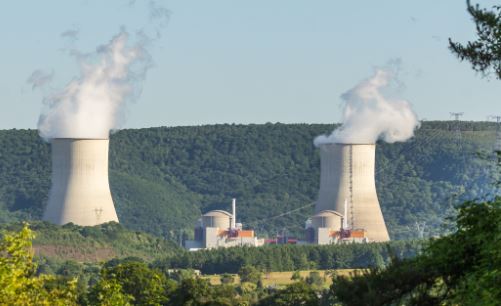
In a nuclear power plant, energy conversion takes place in four steps as follows: Nuclear energy → Thermal energy → Kinetic energy in steam → Kinetic energy in the turbine → Electrical energy
1) Conversion of nuclear energy to thermal energy: The nuclear energy released during the fission of nuclei of atoms like Uranium or Plutonium is used to obtain thermal energy.
2) Conversion of thermal energy to kinetic energy in steam: This thermal energy is used to heat the water present in a boiler. Steam of very high temperature and pressure is generated and it is directed on the blades of a turbine.
3) Conversion of kinetic energy in steam to kinetic energy in the turbine: The kinetic energy in steam drives (rotates) the turbine.
4) Conversion of kinetic energy in the turbine to electrical energy: The rotation of the turbine is used to rotate the electromagnet in the generator and electrical energy is produced based on the principle of electromagnetic induction.
Step-by-step energy conversion in Solar thermal power plant
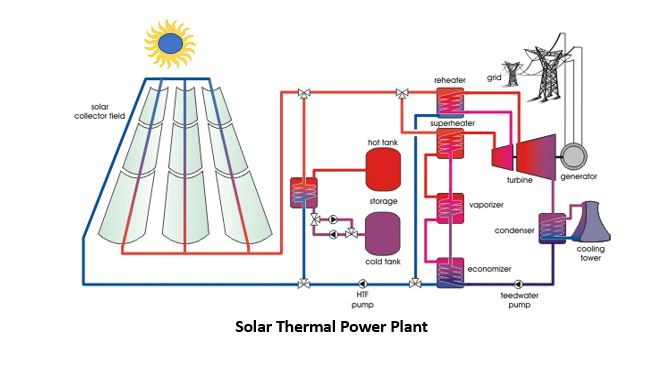
In a solar thermal power plant, energy conversion takes place in four steps as follows: Energy in solar radiations → Thermal energy → Kinetic energy in steam →Kinetic energy in turbine Electrical energy
1) Conversion of solar energy to thermal energy: Many reflectors reflect and concentrate solar radiation on absorbers, where solar energy is converted into thermal energy.
2) Conversion of thermal energy to kinetic energy in steam: This thermal energy is used to heat the water. Steam of very high temperature and pressure is generated and it is directed on the blades of a turbine.
3) Conversion of kinetic energy in steam to kinetic energy in the turbine: The kinetic energy in steam drives (rotates) the turbine.
4) Conversion of kinetic energy in the turbine to electrical energy: The rotation of the turbine is used to rotate the electromagnet in the generator and electrical energy is produced based on the principle of electromagnetic induction.
FAQ
What is Green Energy? or What do you mean by Green Energy?
The energy generated by processes that are environment-friendly is called green energy.
What are the 5 types of green energy?
Solar energy, wind energy, hydropower, geothermal energy and Biomass Energy
Which is the biggest green energy company in India?
Adani Green Energy Ltd.
What country is 100% green energy?
Iceland